Making Art Under Authoritarianism
Before we delve into what will likely be some highly divisive discourse, I’d like to extend a reassurance to anyone who believes in the intrinsic value of authoritarian politics. Our discussion today will prove just as valuable to you as it will be to the bleeding hearts, the socialists, the people of color, the women, the disabled and neurodivergent people, the transgender people, and the queer people beside whom I proudly stand. What we’re going to talk about today is courage, and accountability, and why the world cannot abide silence from any person of conscience who, through their craft, shapes the culture that will accompany and inform the civilization we are building. If you believe in something, and if you are not right now in this very moment leveraging the full extent of your craft and resources to cultivate that thing which you believe in, then I guarantee the people who hate and fear you are working harder than you are to define your future.

Leveraging the power for yourself.
If you are leveraging your craft in the cultivation of something you do not believe in, on the other hand, you need to know that history has run out of time and tolerance for you. Getting out of your commitment will grow harder with each passing day, and you become increasingly responsible for a future that you never wanted to see. If you’ve been waiting for some kind of public service message that it’s time to break ranks, this is that message.
Who is this man, you may well ask? My name is Tennyson. Many of you know me as a prolific screenwriter and script doctor, which I am, but today I am addressing you as a showperson who has survived and served this industry under circumstances that might well have ended my life on any countless number of occasions... and which probably should have killed my faith in our power as showpeople. Instead, I’m urging you to leverage that power for yourself.
Following the President and the FCC’s bullying of talk show hosts like Steve Colbert and Jimmy Kimmel, our government is now in the business of sanctioning any media that it believes to counter the best interests of the state. No American media company exists outside the pressure to appease the political interests of the Trump Administration, and our nation’s most stalwart journalistic institutions have entirely buckled in the face of corporate buyouts and new, politically motivated management. If I don’t wind up having to self-publish this blog, I’ll consider that a victory!
If you have something to say, you need to say it. Right now.
In October, I was contacted by a young editorial writer who wanted my advice on how to engineer satire that reaches people across the political spectrum and that will consequently appeal to his publishers. What I told him is that Colbert and Kimmel are precisely the inoffensive satirists he’s striving to emulate, and that our government has declared them to be enemies of the state for their political views. I told him that he’s still young, and Colbert and Kimmel are old. I told him that he’s still finding his voice, and that these gentlemen represent institutions. If this young man is not willing to take more creative and political risk than Steve Colbert and Jimmy Kimmel, then why in the flaming depths of Hell does he want to write satire?!?
Is he biding his time? Is he building his platform, so he can say something more meaningful down the road? Our citizens are being deported to foreign concentration camps, and they’re being shot in the streets by our own police forces here at home. Our government is seizing direct control of the media. If this young man has something to say, he needs to say it right now!
We've been here before.
Jacques Cousteau, the famed oceanographer and filmmaker, was in pre-production with a film about shipwrecks off the Atlantic coast when the Germans invaded France. Within just a few short months, the entirety of France was living under rations and curfews dictated by their enemy. Swimming burns a lot of calories, and food was scarce. Cameras and film, of course, were getting funnelled into the German war effort.
In his autobiography, Jacques Cousteau admits to stealing what supplies he needed to make his film. Imagine the iconic oceanographer who inspired Wes Anderson’s Life Aquatic with Steve Zissou sneaking into trainyards and liberating food rations from the occupying German Army. Believe it or not, stealing underwater camera equipment from the scourge of humanity was not the most incredible thing Jacques Cousteau did to make this movie possible… but it’s the part of his story most relevant to the times in which we find ourselves today.
Most people know Russian filmmaker Andrei Tarkovski for his landmark science-fiction psychological thriller, Solaris. When Tarkovski was just starting his career, it was illegal in the Soviet Union to distribute religious iconography. Slavic people found strength in their Saints, and in God, and in the pageantry and teachings of the Russian Orthodox Church, so the Soviet government banned religion in order to make the people more reliant on the ethical and moral messaging of the state.
Tarkovsky’s first film, Andrei Rublev, is about a renowned Russian icon painter who used his artistic mastery and his visionary reinterpretations of sacred iconography to push back against the church and the crown, and to create space in feudal Russia for individual expression. Throughout the film’s production, post production, and screenings, Tarkovsky took great care to ensure that no more than one reel of the film was ever in any given location at one time. Audiences were forced to watch the movie in segments, sometimes months apart, and Tarkovsky cut the film specifically to be seen in this way.
Undercover KGB agents, aware of Tarkovsky’s movie, were trying to assemble a complete print of the film. Once all four reels were assembled, they’d have what they needed to lock Tarkovsky away. He still made his movie. He still screened his movie. Until the movie premiered in Cannes, many years later, the only place Tarkovsky’s film existed in its entirety was inside the minds of those audience members who had managed to see the whole thing.
Why? Why take so much risk, just to make something for other people to watch? Put another way, why does the government fear us so much?

I believe in the inherent dignity, sovereignty, and goodness of all people.
When people sit down in a dark room and they watch something together, what they see will become a thing they have in common with everyone else in the audience. When they leave, they do so with the unspoken understanding that everyone else in the audience has made a conscious choice to see that film. If someone went to see your favorite movie, then maybe that person likes the things you like. Maybe that person understands the things you value. Maybe you can trust that person.
When two strangers meet and begin to share ideas, what shapes the nascent trust between them is the quality and content of the culture they share. Make no mistake, my friends. When our government censors our media, our freedom to trust in one another is the thing they’re trying to take from us.
I believe in the inherent dignity, sovereignty, and goodness of all people. I celebrate the ways in which people can surprise me. Right now, somewhere in the world, someone is reading this article who believes that I deserve to die for sharing these views with you. Possibly, someone might be reading this article who is prepared to make certain that I do. So, why am I writing this? How do we live with that kind of fear?
Jacques Cousteau would remind us that somewhere in the world, without a doubt, there’s a kid who’s never seen the bottom of the ocean. Now is the time for each of us to make the art and tell the stories we wish we were brave enough to make, and tell, and share. Is it scary? Are we at risk? Will there be a cost?
Yes. Certainly, there will be a cost. And if he were here with us today, Jacques Cousteau would tell us that whenever possible, we should make the Nazis pay it.
Let's hear your thoughts in the comments below!
Got an idea for a post? Or have you collaborated with Stage 32 members to create a project? We'd love to hear about it. Email Ashley at blog@stage32.com and let's get your post published!
Please help support your fellow Stage 32ers by sharing this on social. Check out the social media buttons at the top to share on Instagram @stage32 , Twitter @stage32 , Facebook @stage32 , and LinkedIn @stage-32 .
About the Author
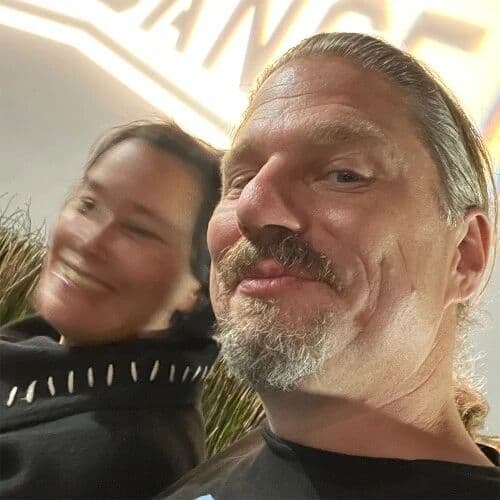
Tennyson Stead
Director, Producer, Screenwriter
Tennyson E. Stead is a master screenwriter, a director, a worldbuilder, and an emerging leader in New Hollywood. Supported by a lifetime of stagework, a successful film development and finance career, and a body of screenwriting encompassing more than 70 projects, Stead is best known for writing an...